
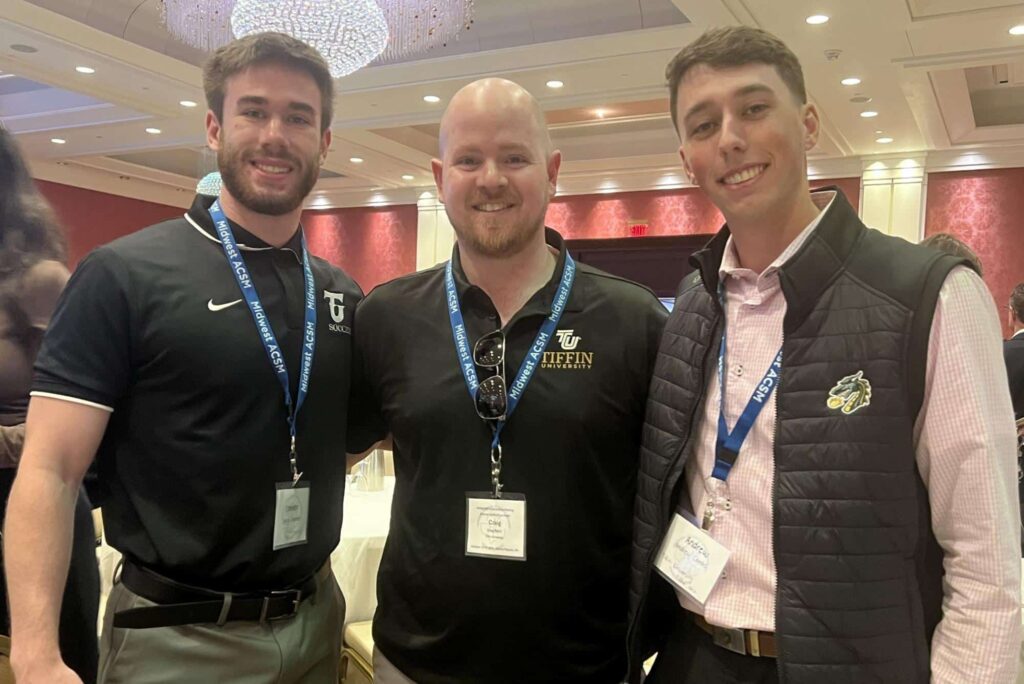
When Tiffin University exercise science students talk about “learning by doing,” this is what it looks like in real life. In October 2025, Assistant Professor of Exercise Science Dr. Craig W. Berry and Clinical Exercise Physiology graduate students Andrew Combs and Connor Webster traveled to Grand Rapids, Michigan, to attend and present at the Midwest Chapter of the American College of Sports Medicine (ACSM) Annual Meeting. Both Andrew Combs and Connor Webster earned their Bachelor of Science in Exercise Science degrees at TU.
ACSM is one of the leading professional organizations in the exercise science and sports medicine field. Its regional and national conferences bring together researchers, clinicians, faculty and students to share the latest findings on human performance, health and physical activity. The Midwest Chapter meeting, held October 15-17, 2025, gave TU students the chance to step into that professional world as presenters, not just observers.
For Dr. Berry and his students, the conference provided an opportunity to share their research, connect with experts, and see how the concepts they study at TU are applied in real-world practice. It was also a first for Tiffin University’s Exercise Science Department, marking the first time TU exercise science students presented research at this event.
Below, Dr. Berry, Andrew Combs and Connor Webster answer questions about why they attended the ACSM Midwest Annual Meeting, what they learned and how the experience is shaping their goals in exercise science.
Why did you choose this particular conference to attend with students?
Dr. Craig W. Berry: The American College of Sports Medicine (ACSM) is the leading governing body within the exercise science discipline. In addition to the national annual meeting held in the spring, there are regional conferences held generally each fall. Ohio falls within the Midwest Region defined by the ACSM.
These regional conferences are much more student-oriented and allow a relatively relaxed environment for students to attend a conference without the higher expectations and pressures associated with the national conference, especially if they have not presented at a conference before.
What topics, sessions, or speakers stood out to you the most – and why?
Andrew Combs: My favorite part was getting to be one of the many researchers presenting their projects! The keynote speaker on the first day of the conference was Dr. Douglas Casa. He was representing the Korey Stringer Institute at the University of Connecticut. His presentation was about his years of experience researching and treating Exertional Heat Stroke in professional athletes, military members, and multiple other organizations.
Connor Webster: I felt excited to represent TU at this event. This was the first time that students presented research for TU’s Exercise Science Department, so it was a great privilege to help the department take this big step. I really enjoyed being around peers and professionals from other programs who were interested in the same field as me.
It was a great event to meet new people who shared interests and curiosities in the field. The poster presentation sessions overall stood out to me the most. It was neat to see what areas of research students chose to present that I would not have thought of investigating myself. This specific exposure reminded me of how broad the exercise science field is and the different routes students can take to pursue a career in this field.
What professional benefits did the conference offer for faculty development and networking?
Dr. Craig W. Berry: The conference schedule is packed with presentations on the latest research, findings, guidelines, and equipment improvements occurring within exercise science, as well as the medical field as a whole. These educational sessions provide the latest information on how the field is moving forward and inform faculty members on how to address these changes in the classroom.
The conference also innately promotes networking through the various social gatherings held throughout the 3-day meeting, allowing for collaboration and introduction of students and exposing them to opportunities they may otherwise not been presented with.
Did you participate in any presentations, poster sessions, or networking events?
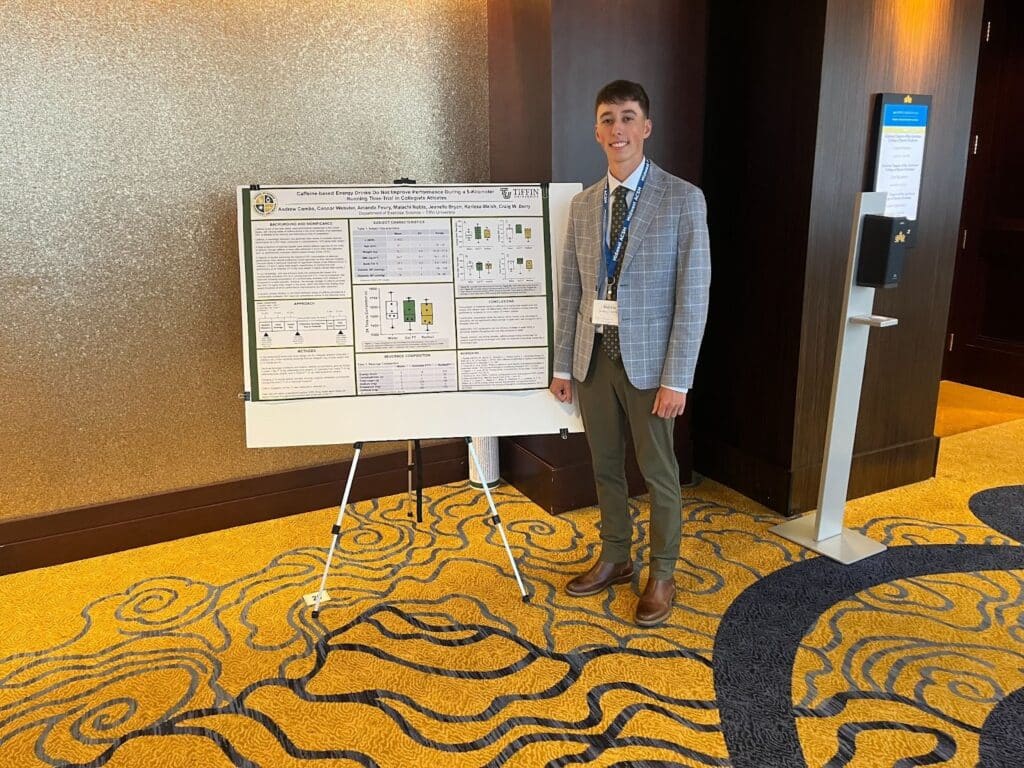
Andrew Combs: Yes, the first night that we arrived there, we got to do some networking with other professors and students from the region. On day two, I had the opportunity to present my own research poster that we had been working on for the past year. In this poster session, I spoke with many students and professionals in the field of EXS about our research.
Throughout the rest of the conference, I attended multiple oral and poster presentation sessions that covered a variety of different topics. And in addition to that, I was able to meet and talk with some of Dr. Berry’s many graduate school connections at dinner.
Connor Webster: I presented the research study Dr. Berry is conducting at one of the poster sessions. My presentation covered the effects caffeine consumption has on hydration after running a 5-kilometer time trial. I had a great time presenting. It was a big push out of my comfort zone, but I was able to have great conversations with other students and professionals who stopped by my poster. This was a great opportunity for me because it challenged my public speaking skills and professionalism.
How did student participation enhance the overall experience?
Dr. Craig W. Berry: I believe that having the students (Andrew and Connor) attend the conference did several things to improve the overall experience. Namely, sharing our love and passion for science outside the classroom was quite enjoyable. Having both of them present our research findings at the conference was a nice way to get the Tiffin University name and its bachelor’s exercise science program and master’s clinical exercise psychology program some wider recognition around the region.
Both students engaged extensively with students and faculty members from other universities both during and after their presentations, with several asking for details on Tiffin University and its exercise science program.
How did this experience make you feel more prepared for your future career in Exercise Science?
Andrew Combs: As an aspiring orthopedic surgeon, this conference gave me multiple ideas for new research that I can put together during medical school. In addition to this, I learned multiple new pieces of information from the presenters that will help me be a better practitioner one day.
Finally, getting these firsthand connections with top researchers in the field of EXS provided me with knowledge of what research is still needed to better understand human performance and recovery.
Connor Webster: Overall, I believe this experience boosted my confidence in my own professionalism and readiness for a career in Exercise Science. I was required to be ready for essentially any question about my topic on hydration, so I needed to be able to pull from material learned in my courses at TU and independent research related to the material I was presenting.
Going into the poster session, I was nervous about how the presentation would go, but I was able to gain confidence in myself after getting through the experience. It also allowed me to gauge how I stand with other prospective students and professionals in this field. I would highly recommend taking advantage of this kind of opportunity to any student who is able to get it.
What specific sessions, research, or discussions were most valuable for Tiffin’s Exercise Science program?
Dr. Craig W. Berry: The keynote session on the dangers of heat stroke and exhaustion I believe could be quite consequential and could help with our various sports teams that primarily compete outdoors during the hotter times of the year, especially at the beginning of the fall semester (i.e., football, soccer, cross country) and end of the spring semester (baseball, softball, track & field, etc.).
What did you learn about the Exercise Science field that excites you about your future?
Andrew Combs: I learned that EXS professionals are becoming more and more necessary for implementing proper prevention of all sorts of health conditions. This means that job openings should be on the rise!
Connor Webster: The main thing I learned about the field is that it is still growing in its literature. This excites me because, despite the field being around for so long, there is still much that is unknown or not fully understood. Seeing this, I am motivated to pursue independent research in my career to continue expanding the field.
What did you observe about how the students engaged or grew from this experience?
Dr. Craig W. Berry: I think both Andrew and Connor were very nervous leading up to their presentations on the second day of the conference. However, as they started talking more and more about their research with other students and conference attendees on the first day, you could tell they were getting more confident in their knowledge. I think this conference helped them better understand that there is much more to the field beyond the classroom and that there is always new information coming out to stay on top of in their future careers. The networking they did I believe, will benefit them the most in the long-run.
What advice would you give to other TU students who might want to attend a conference like this?
Andrew Combs: I would tell any TU student who is interested to get involved in research early. I have attended the conference twice now, once as an observer and most recently to present research. I would tell them that the feeling of having your own hard work there for all the other students and professionals to see is a great feeling.
Connor Webster: Do it! Scared, nervous, whatever, just do it. It is a great opportunity to put yourself out there. This is especially beneficial if you are still looking or deciding on what you want to do in the field. There are many professionals from different schools that you have the chance to connect with and learn from.
How does attending conferences like this support our mission of linking knowledge to professional practice? Are there new ideas, collaborations, or opportunities you plan to bring back to campus?
Dr. Craig W. Berry: There is so much more to the field beyond what we can cover in the classroom. I always tell my students that everything they learned in class, every topic covered, every piece of information shared, came from research that was done outside the classroom. That research was then shared at a conference and published in a paper that they can read themselves.
I think attending these conferences is a great way to increase recognition of that fact and see it first-hand. I believe this will better fuel their knowledge and understanding of the field as they move beyond Tiffin into their professional practices and future careers.
I believe that in the future I would like to take larger groups of students to the conference than just a couple at a time. I think the students registered for Research Methods (EXS475) are the primary audience that this would appeal to.
Additionally, throughout the conference, there are tables and booths set up that schools can rent out and hand out information on their programs to any interested passersby. This could be beneficial to our school and program, and could be some nice advertisement opportunities to spread our name out there.
Any memorable moments, lessons learned, funny stories, or highlights from the trip?
Dr. Craig W. Berry: On the final night of the conference, there was a Jeopardy-style “Quiz Bowl,” where each school could pick three undergraduate students to form a team and represent the school in the competition. The winning school gets its registration for the national conference paid for and earns a spot in the national conference Quiz Bowl. Even though Connor and Andrew were ineligible as graduate students, we still attended and watched (as almost all conference goers did) and had a great time testing our knowledge of exercise science.
I think in the future I would like to take more undergraduate students to the conference and sign them up for this competition. It is a fantastically fun time and provides a great, relaxed environment to socialize with other conference goers.
Andrew Combs: One of my favorite memories from the trip was the exercise science-themed jeopardy that happened on the second night of the conference. All the students gathered in one of the main conference rooms to compete against other schools.
Connor Webster: My favorite memory from the trip was the quiz bowl that was held at the conference. Attending schools can compete against each other in a Jeopardy-style trivia game over exercise science if they have 3 undergraduate students. While I could not compete, it was a fun, laid-back time that I was able to share with the other student I was with and my professor. I was also able to test my knowledge and really see how well I paid attention in class. It was a great time where each school was competitive but having fun with the event.