
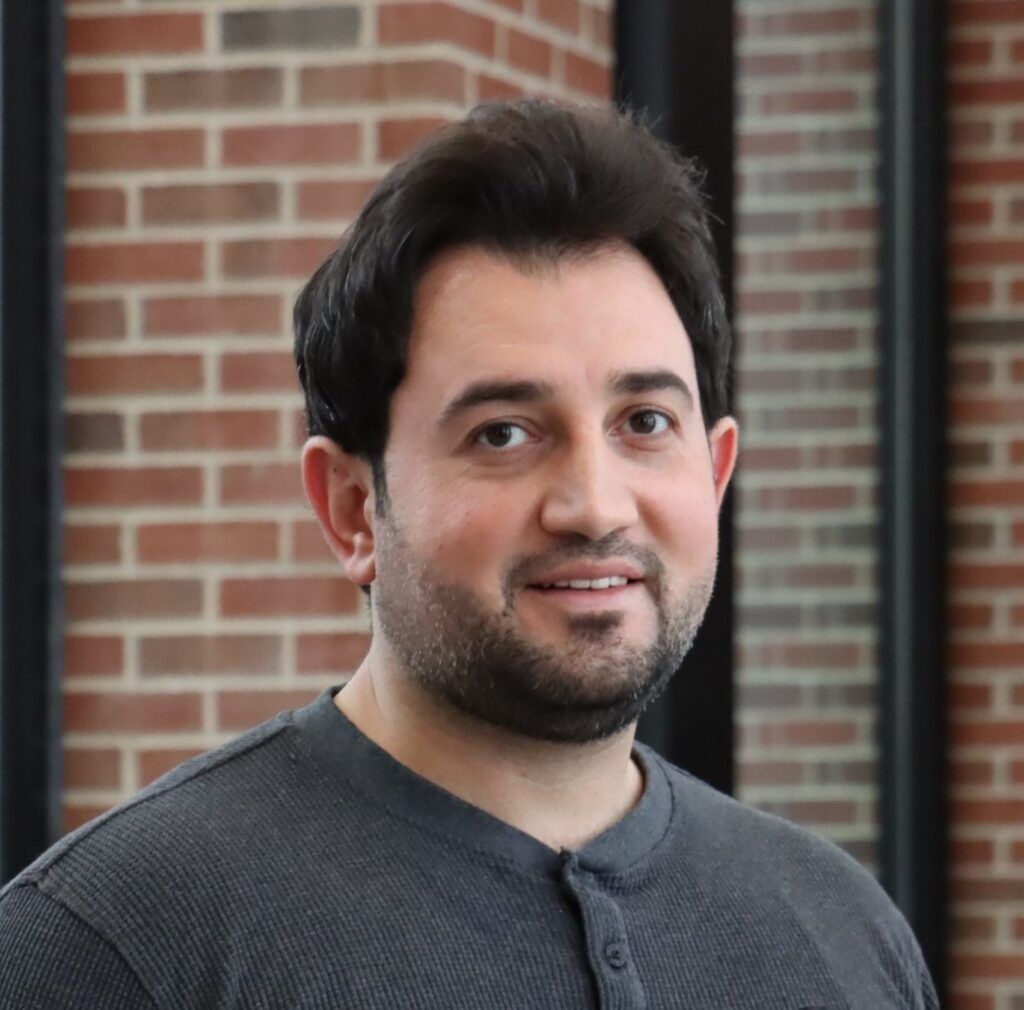
Executive Director, AI & Data Science Center | Associate Professor of Computer Science
Where did you obtain your degrees?
I earned my B.S. in Computer Science from Mutah University in Jordan, my M.S. in Computer Science from the University of Sunderland in the United Kingdom, and my Ph.D. in Computer Systems Science from Binghamton University (SUNY) in New York. Studying in three different countries gave me a global view of how technology and education can transform communities and that perspective shapes how I teach and lead at Tiffin University today.
My research centers on artificial intelligence, machine learning and optimization with real-world applications in health, education and smart systems. For example, I’ve coauthored work on automatic irrigation systems in the Jordan Valley, intelligent risk alarms for asthma patients, and smart dome control using machine learning and fuzzy logic, as well as several studies on student performance and academic misconduct using data mining and neural networks. I’ve also published in the area of software evolution and code summarization, helping engineers better understand large, evolving systems. Altogether, these projects share a common theme: using AI not just as a theoretical tool, but as a practical way to solve problems that directly affect people and communities.
What did you get your degree in and what inspired that choice?
All of my degrees are rooted in computer science, systems engineering and artificial intelligence. From early on, I was fascinated by how we can turn messy data into clear decisions and build “intelligent” systems that help people in real life not just in theory. That curiosity pulled me deeper into AI, machine learning and optimization, especially in areas like health, education and smart environments. I chose this path because I didn’t just want to understand how computers work; I wanted to figure out how AI can actually make people’s lives better.
Tell us about your first job after you graduated from college.
My first major role after graduating was as a research and teaching assistant at Binghamton University in New York, where I worked on intelligent systems while supporting computer science and engineering courses. It was the perfect mix of hands-on research and day-to-day teaching. One moment I was tuning algorithms; the next I was helping students grasp the same ideas in the lab. That experience convinced me that I love being in environments where discovery and learning happen side by side.
How did your career path lead you to teaching at Tiffin University?

After finishing my Ph.D., I returned to the Middle East and built my career as a faculty member and academic leader, eventually becoming a department chair and assistant dean. I helped launch new programs in data science, artificial intelligence and cybersecurity, and I realized how much I enjoy building things from courses and curricula to entire departments. Later, as a visiting research scholar at Texas A&M International University, I worked on AI projects in smart traffic, human–robot collaboration and precision agriculture, which pulled me back into U.S. higher education. When Tiffin University invited me to help build an AI ecosystem including new degrees, an AI & Data Science Center and an AI & Robotics Lab; it felt like the perfect opportunity to bring all of that experience together for students.
How do you prepare students for challenges they’ll face in their careers/after graduation?
I prepare students by giving them a strong technical foundation and then constantly pushing them to apply it in real-world contexts. In my classes, they don’t just click buttons in AI tools they write code, analyze real data, debug broken systems and explain their choices in plain language. We talk openly about ethics, bias, privacy and the social impact of AI so they learn to think like responsible leaders, not just programmers. My goal is for them to leave Tiffin confident, adaptable and ready to keep learning long after graduation.
What makes Tiffin University stand out to you as a faculty member?
TU stands out because it has the heart of a close-knit campus and the ambition of a big innovator. I know my students by name, I see them growing from their first AI or programming class to advanced projects, and I get to work with colleagues who are genuinely excited about what’s next. At the same time, TU is making bold moves launching new AI and analytics degrees, investing in an AI & Data Science Center, and bringing AI into majors across campus. It’s rare to find a place where you can dream big about the future of AI and still feel like you’re part of a family.
It’s rare to find a place where you can dream big about the future of AI and still feel like you’re part of a family.
How do you incorporate TU’s motto – “Without risk, there is no gain” – into your own life or classroom?
“Without risk, there is no gain” is basically the story of my career. Moving between countries, founding new departments and helping launch AI programs and labs have all required stepping into the unknown. I bring that same mindset into my classes and the AI & Robotics Lab by encouraging students to try ambitious projects, experiment with new models and be willing to fail, learn and try again. I tell them that in AI, as in life, mistakes are not the end of the story — they are feedback that helps you grow.
What’s a fun fact most people don’t know about you – or an interesting hobby?
A fun fact about me is that I absolutely love to travel. I’m energized by exploring new countries, cultures and cities whether it’s walking through historic neighborhoods, visiting universities and tech hubs, or simply observing how people live and work in different parts of the world. Travel keeps me curious and open-minded, and I often bring those experiences back into the classroom by sharing real stories and examples with my students.
What’s your favorite book, film, or quote – and why does it resonate with you?
One quote that guides my teaching is often attributed to Benjamin Franklin: “Tell me and I forget. Teach me and I remember. Involve me and I learn.” It captures exactly how I think about AI and data science education. You can’t really learn these fields by just listening or memorizing definitions you have to get your hands dirty, build things, break them, fix them and talk about the impact. At Tiffin, I try to involve students as much as possible so they’re not just absorbing information; they’re discovering what they’re capable of.