
Athletic trainers play an important role in sports and active lifestyles. They help people stay healthy, respond to injuries with confidence and skill, and guide safe return to practice, work or competition. The work brings together science, problem solving and communication, and it keeps athletic trainers closely involved with teams, athletes and performance settings.
Have you been wondering how to become an athletic trainer? This is a healthcare profession with a clear education and certification path. A strong background in anatomy, physiology, exercise science and injury care is essential, along with supervised clinical experience and professional credentials. Choosing the right bachelor’s degree is the first step on that path, and a Bachelor of Science in Exercise Science is designed to provide that foundation.
What Is an Athletic Trainer?
An athletic trainer is a licensed healthcare professional who specializes in the prevention, evaluation, treatment and rehabilitation of injuries and medical conditions related to physical activity. They assess injuries on the field or in the clinic, provide immediate care, design rehabilitation plans and help athletes and active individuals train in ways that reduce risk. Athletic trainers are allied health professionals who often serve as the first point of contact in a coordinated care team that includes physicians, physical therapists and other providers.
The work of an athletic trainer is different from that of a personal trainer. Personal trainers focus on general fitness and performance for healthy clients, while athletic trainers address medical concerns such as sprains, strains, concussions, heat illness and overuse injuries. You will find athletic trainers in high schools, colleges and universities, professional sports organizations, sports medicine clinics, hospitals, military units and workplaces where employees have physically demanding jobs.
To be effective, athletic trainers need both technical knowledge and strong interpersonal skills. They must understand the science behind movement and injury, and they must also be able to communicate clearly with athletes, coaches, families and healthcare colleagues, often in high-pressure situations.
What Education Is Required to Be an Athletic Trainer?
Becoming an athletic trainer usually follows a two-step academic path. The first step is earning a bachelor’s degree in a related field, such as exercise science, kinesiology or another allied health major. In that degree, students complete courses in biology, chemistry, anatomy, physiology, biomechanics and exercise physiology, which explain how the body functions, how tissues respond to stress and recovery and how training and health conditions influence performance and injury risk. Many also gain early experience through observation hours or shadowing with certified athletic trainers.
The second step is completing a professional master’s program in athletic training that is accredited by the Commission on Accreditation of Athletic Training Education (CAATE). Graduate level coursework covers topics such as injury assessment, taping and bracing techniques, emergency care, rehabilitation planning, therapeutic modalities and aspects of healthcare administration. Clinical education is a core requirement, and students spend significant time in supervised placements with school teams, sports medicine clinics or hospital-based programs, applying what they have learned with real patients.
After finishing a CAATE-accredited program, graduates are eligible to sit for the Board of Certification exam, which is a key milestone in becoming a certified athletic trainer. Most states also require a separate state license, so new professionals must meet the specific regulations in the state where they plan to work.
Start Your Athletic Training Education at TU
At Tiffin University, students who are interested in athletic training can begin their preparation with a Bachelor of Science in Exercise Science. This degree is part of TU’s Pre-Professional Pathways and is designed for students who plan to move into graduate study in athletic training, physical therapy, physician assistant programs or other health professions. The major focuses on how and why humans move, and how exercise can be used to support performance, health and recovery.
The exercise science curriculum brings together courses in biology, chemistry and exercise physiology. Students study biomechanics, physiology of exercise, health screening and interpretation, strength and conditioning and exercise testing and prescription. They also learn about exercise programming for healthy, athletic and clinical populations, chronic disease development, lifestyle modification techniques and corrective exercise approaches that help reduce muscular and skeletal pain.
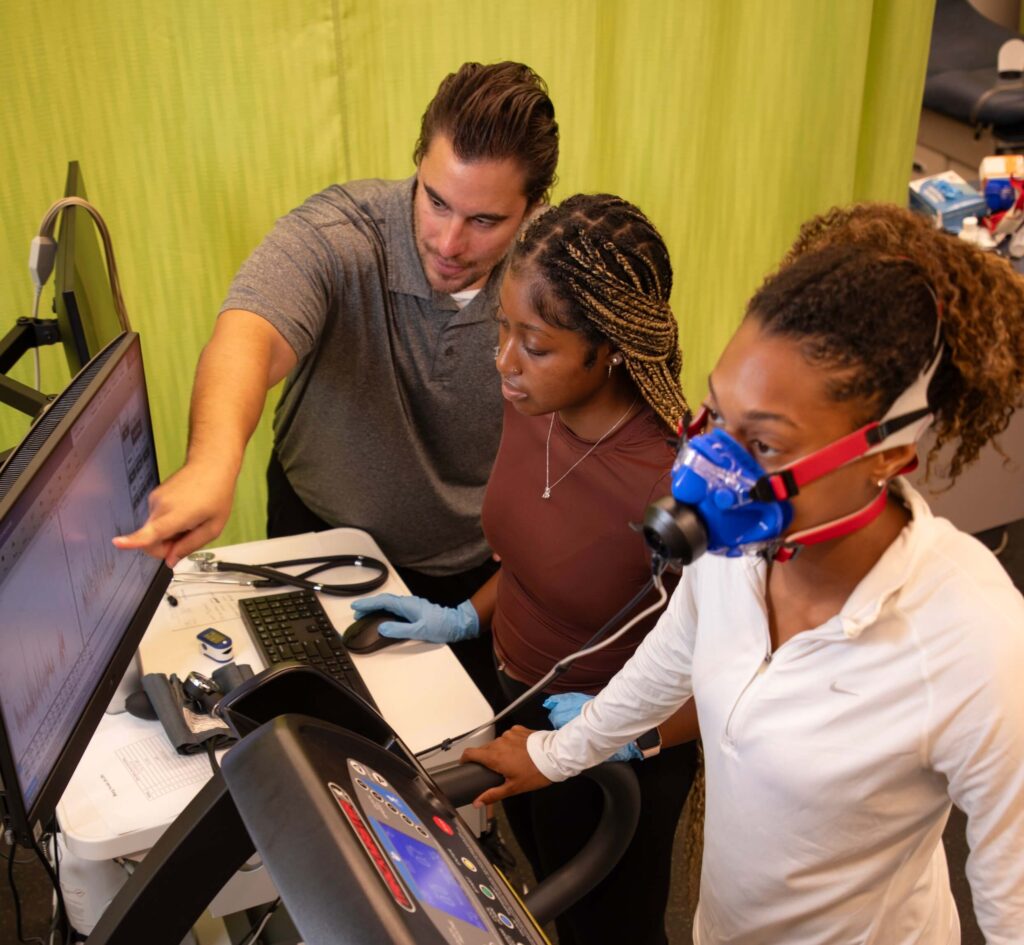
In the Exercise Science Lab, students work with tools such as heart rate monitors, body composition analyzers, electromyography systems and specialized exercise bikes and software. They complete lab activities related to body composition, flexibility, maximal oxygen uptake, musculoskeletal fitness and biomechanics. These experiences build confidence with equipment and data, and they mirror the types of assessments and observations that athletic trainers rely on in practice.
Professional preparation is part of the program. Students have opportunities to earn certifications in First Aid, CPR and AED use, and to pursue industry credentials in areas like exercise physiology and strength and conditioning. An internship is part of the experience, and recent placements have included physical therapy clinics, cardiovascular rehabilitation programs and sport science settings. Faculty members bring real-world backgrounds in clinical exercise physiology, rehabilitation, strength and conditioning and corporate wellness, and they mentor students as they explore athletic training and related graduate programs.
By the end of the degree, students have a strong foundation in movement science, extensive lab practice and meaningful field experience. Those elements help position graduates to apply to CAATE-accredited athletic training programs with a competitive academic and practical profile. The Exercise Science – Allied Health pathway is a particularly strong choice for students with this goal.
Pursue a Career in Athletic Training
Athletic training offers a way to combine an interest in sports with a commitment to health and patient care. Certified athletic trainers help individuals stay active, manage injuries safely and return to the activities that matter most to them. For students who enjoy science, want to work with people and feel energized by athletic environments, it can be a satisfying and impactful career.
A Bachelor of Science in Exercise Science from TU helps students build the knowledge, skills and experiences that professional athletic training programs look for. If you want to become an athletic trainer, this degree provides a solid step toward advanced study and a future in this growing healthcare profession.