
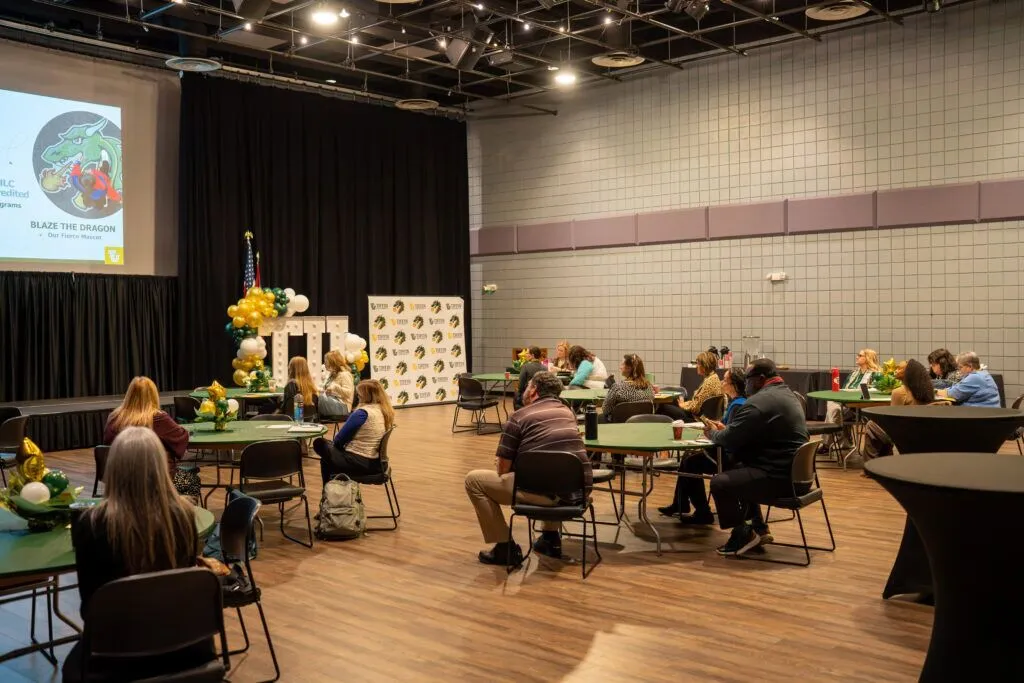
On Thursday, November 5, Tiffin University hosted its first “Building Pathways to Student Success” event to build connections with educational professionals from local high schools and community college partners. This event was designed as a chance for professionals working with high school or collegiate transfer students to better understand the college admissions process, discover more about TU and to make connections with other professionals.
During the event, attendees were able to learn more about the collegiate admissions process and Tiffin’s process more specifically. They were also provided with information on the Dragon Pathway, TU’s guide for all students to navigate their degree program and make it to graduation on time. Along with learning about pathways, attendees were able to learn about DragonNext, our community college partnership program that allows students attending partner schools to transfer into TU at a lower cost, building on their associate to a bachelor’s or their bachelor’s to a master’s. During a breakout session, attendees were able to ask questions and discover ways to better assist their students from both high school and transfer student lenses. Attendees also had multiple opportunities to network amongst themselves and with TU faculty and staff while exploring campus on a tour, during lunch and while they competed in TU Trivia.
Below, Cassie Paas, Director of Online Enrollment, Samantha Busack, College Credit Plus Program Manager, Elisha Tyree, Manager of Online Undergraduate Admissions and Ashley Triplat, Transfer Admissions Representative, answer questions about the event. This includes a reflection on the purpose and goals, the importance of connections and partnerships with peers in education and the future of events like this.
What was the primary goal of hosting Building Pathways to Student Success, and why was it important for Tiffin University to bring high school and community college professionals to campus?
Samantha Busack: The primary goal of the event was to connect with enrollment professionals from area high schools and higher ed institutions to educate them about TU’s programs, resources and student-centered approach. We also want to strengthen partnerships so that both parties are finding the best-fit education path for the student.
Cassie Paas: The primary goal was to give the professionals who work directly with students an opportunity to experience Tiffin University firsthand. We wanted them to get to know us beyond our website or the conversations they may have had with our admissions team. Bringing them to campus allows us to showcase our people, academic programs, resources and opportunities while also giving them a chance to build relationships with the faculty and staff who support our students. We recognize that these professionals play an important role in helping students make decisions about their futures, and we want them to feel confident in what TU has to offer.
Elisha Tyree: The primary goal of Building Pathways to Student Success was to strengthen partnerships between Tiffin University and the educators who play a key role in helping students navigate their educational journeys. Bringing high school counselors, community college advisors and other education professionals to campus allows us to build relationships, share information and ensure we are all working together with the same goal in mind: helping students succeed.
Why are strong relationships with high school guidance counselors, college advisors and community college partners so important to the college-going process?

Samantha Busack: Discussions and decisions about college are happening while students are in high school. Giving students the best information and resources about our institutions will help them make the best decision for themselves. Connecting with guidance counselors, advisors and other partners allows us to better reach and understand the student’s needs.
Cassie Paas: These individuals are often some of the most trusted resources students turn to when making decisions about college and/or their next steps. They help students navigate their options, understand requirements and identify opportunities they may not have otherwise considered. Having strong relationships with these professionals allows us to work together rather than independently. When they understand our programs, admissions process and available resources, they are better equipped to recognize when Tiffin University might be a good fit for a student and connect them with us.
Elisha Tyree: These professionals are often among the most trusted resources for students as they explore their educational options. Strong relationships allow for open communication, collaboration and the sharing of accurate information, which helps students make informed decisions and feel confident throughout the college process.
How does creating opportunities for these professionals to connect directly with TU faculty and staff help strengthen the support they provide to students exploring their college options?
Cassie Paas: It puts a face to the name and helps make the connection more personal. Rather than simply having a contact in admissions, these professionals have the opportunity to meet the people who are actually working with students once they arrive at TU. They can ask questions, hear directly from faculty about academic programs and better understand the student experience. Building those relationships makes it easier to have conversations down the road and helps ensure students are receiving accurate information from people who know our institution.
Elisha Tyree: Direct connections create a stronger understanding of the opportunities and resources available at Tiffin University. When counselors, admission representatives and advisors can speak directly with faculty and staff, they gain valuable insights that help them better guide students and answer questions, ensuring students receive accurate and timely support.
Throughout the event, attendees had opportunities to learn about Dragon Pathways, the admissions process, transfer opportunities and TU’s academic offerings. Why is it important for education professionals to have a clear understanding of these resources?
Cassie Paas: There are so many pathways students can take to reach their educational goals, and we want these professionals to understand that there isn’t always just one route. Whether a student is coming directly from high school, transferring from a community college or exploring a different academic direction, we want them to understand the opportunities available at TU. Dragon Pathways provides another way to help students identify a path forward. The more familiar our partners are with these resources, the better equipped they are to help students see the possibilities and connect them with the right people.
Elisha Tyree: The more familiar education professionals are with these resources, the better they can help students identify opportunities that align with their goals. A clear understanding of admissions requirements, transfer pathways and academic programs allows them to provide guidance that makes the transition to college smoother and less overwhelming.
What value do you see in bringing together high school and community college professionals to share experiences, ask questions and build connections with the TU community?
The Team: I think there is tremendous value in bringing these groups together because, although they may work with different student populations, they share a common goal of helping students succeed. It also creates an opportunity for us to learn from them. We don’t want this to be a one-sided conversation where we are simply telling people about Tiffin University. We want to hear about the challenges they are seeing, the questions students are asking and where they feel additional support is needed. Those conversations help us become a better partner and better serve students.
How can stronger relationships between TU and these professionals help create a smoother transition for students moving from high school or community college into higher education?
Cassie Paas: Communication is key. When we have established relationships with counselors and advisors, we can work through questions and potential challenges more efficiently. We can help clarify admissions requirements, transfer credit opportunities, financial aid questions and what students should expect as they transition to TU. Having those connections in place before a student begins the enrollment process can make a big difference. Ultimately, we want students to feel supported and know there are people working together to help them take that next step.
Elisha Tyree: Strong relationships promote communication and consistency. When counselors, admissions representatives, advisors and university partners are aligned, students receive clear guidance and experience fewer barriers throughout the transition process. This helps students feel more prepared, supported and confident as they begin the next stage of their education.
At Tiffin University, we recognize that every student’s journey is different. We work to provide multiple pathways to enrollment, a personalized admissions experience and opportunities for students to connect with the people who will support them throughout their time here.
How does Tiffin University work to make the college transition process more accessible and supportive for students, and how do our partnerships with counselors and advisors contribute to that effort?
The Team: At Tiffin University, we recognize that every student’s journey is different. We work to provide multiple pathways to enrollment, a personalized admissions experience and opportunities for students to connect with the people who will support them throughout their time here. Whether that means helping a student understand transfer credit, navigate the application process, explore financial aid or connect with an academic program, we want to remove barriers wherever we can. Our partnerships with counselors and advisors extend that support beyond our campus. They help us identify students who may benefit from what TU offers and allow us to work together to make the transition as seamless as possible.
What do you hope attendees take back to their schools or institutions after participating in this event?

Cassie Paas: I hope they leave with a better understanding of who Tiffin University is, but more importantly, with a sense of connection to the people here. I want them to know that they have contacts they can reach out to, questions they can bring to us and a team that genuinely wants to work with them. I also hope they leave with a few new ideas about opportunities they can share with students. If they walk away feeling more confident in recommending TU as an option and know exactly who to contact when a student needs assistance, then I consider that a success.
Elisha Tyree: I hope attendees leave with a stronger understanding of Tiffin University’s programs, resources and commitment to student success. More importantly, I hope they leave knowing they have partners at TU who are available to collaborate, answer questions and work together in support of students. I want them to feel confident when talking about TU to prospective transfer students.
Are you planning to host additional events of the same nature for education professionals in the future? How will you build off of this event?
The Team: Absolutely. This was our first event of this nature, and we see it as the beginning of something we want to continue building. We recognize how valuable it is to bring our partners to campus, create opportunities for meaningful conversations and strengthen those relationships. Moving forward, we would like to continue offering opportunities for professionals to learn more about TU, connect with our faculty and staff and stay informed about new programs, resources and pathways for students. We also want to take feedback from this event and use it to make future opportunities even more valuable to the people we serve.
What was your favorite part of the event, or what interaction stood out to you most?
Cassie Paas: My favorite part was seeing the conversations happen and watching people make connections with members of our TU community. We put a lot of thought into bringing people together, but the real value comes from the conversations that happen beyond the presentations. I especially enjoyed having the opportunity to hear directly from the professionals who work with students every day. Their questions, experiences and perspectives remind us why these partnerships are so important. It was also rewarding to see our faculty and staff engaged and excited to share what makes Tiffin University special.
Elisha Tyree: My favorite part was seeing professionals from different institutions come together with a shared passion for helping students succeed. The meaningful conversations, exchange of ideas and genuine commitment to student success reinforced how powerful collaboration can be when everyone is working toward the same goal.