
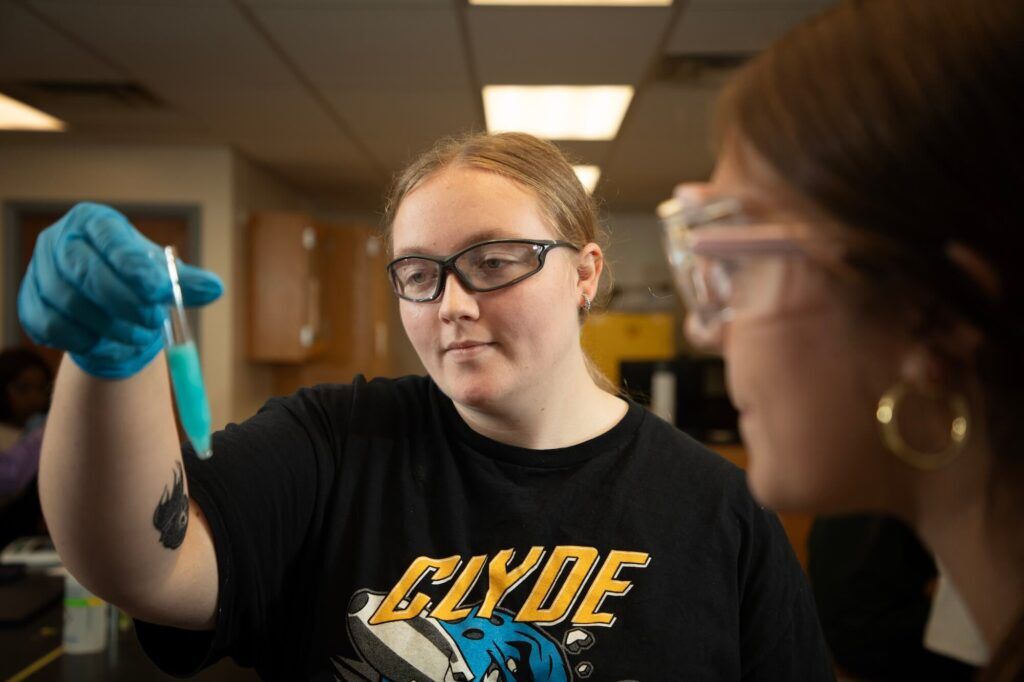
Students who are exploring occupations with a biology degree often find that the field offers far more variety than expected. Biology is not limited to one career path or one type of workplace. An undergraduate background in biology can support careers in research, healthcare, environmental science, laboratory work and more. A biology degree can also prepare students for graduate or professional study in areas such as medicine, dentistry, optometry and veterinary science.
That range of opportunity is one of the reasons biology remains such a strong choice for students interested in science. At Tiffin University, the Bachelor of Science in Biology is designed to help students build that foundation while gaining hands-on experience in labs, fieldwork and research.
How Long Does It Take to Get a Biology Degree?
At Tiffin University, the Bachelor of Science in Biology is designed as a four-year undergraduate degree for many students, though the timeline can vary based on math placement and academic preparation. Students who begin in college algebra, precalculus or calculus follow slightly different pathways to graduation, and those who start in foundational math may take longer to complete the degree.
Students complete coursework in general biology, anatomy and physiology, genetics, microbiology, developmental biology, cell and molecular biology, ecology and evolutionary biology. The curriculum also includes general chemistry, organic chemistry, biochemistry, physics, calculus and statistics. These courses help students build the scientific background needed for biology careers as well as graduate and professional school entrance exams such as the MCAT, GRE and DAT.
TU’s biology program also emphasizes experiential learning. Students take part in laboratory experiments, field experiences and research opportunities that strengthen skills in observation, experimentation and hypothesis testing. For students considering medical, dental, veterinary or research pathways, this hands-on preparation can be especially valuable.
Bachelor’s Degree in Biology Jobs
A biology degree can lead to many different careers, depending on whether a student enters the workforce directly or continues on to graduate or professional school. Some roles are available with a bachelor’s degree alone, while others require advanced education. Here are some occupations students may consider pursuing:
Biochemist and Biophysicist
Biochemists and biophysicists study the chemical and physical principles that shape living organisms and biological processes. Their work often involves laboratory research focused on cells, proteins, genetics, disease or drug development. A biology degree can be a strong first step toward this path, especially when paired with coursework in chemistry and biochemistry. Most roles in this field require graduate study.
Clinical Laboratory Technician
Clinical laboratory technicians perform tests on blood, tissue and other samples to help physicians diagnose and monitor disease. Their work supports patient care behind the scenes and requires precision, scientific knowledge and comfort with laboratory procedures. Biology majors often gain relevant experience through coursework in microbiology, anatomy, physiology and lab-based science. This can be a strong direct-entry path for graduates interested in healthcare.
Conservation Scientist and Forester
Conservation scientists and foresters help manage land, forests and natural resources. Their work may include protecting ecosystems, improving land use and supporting conservation planning. Students interested in ecology, environmental science and fieldwork may find this path especially appealing. A biology degree can provide useful preparation, particularly when combined with coursework in ecology and evolution.
Dentist
Dentists diagnose and treat problems related to teeth, gums and oral health. Their responsibilities include preventive care, restorative treatment and patient education. A biology degree is a common undergraduate path for students planning to apply to dental school because it includes many of the science courses required for admission. However, this career requires a professional doctoral degree.
Epidemiologist
Epidemiologists study patterns of disease and health outcomes across populations. Their work helps public health professionals understand how illness spreads, which groups are most affected and what prevention strategies may work. Biology students interested in health data, disease and community well-being may be drawn to this field. Most epidemiology roles require graduate study, such as an MPH, and some require doctoral-level training.
Food Scientist and Technologist
Food scientists and technologists study food safety, quality, processing and product development. They may work on preserving food, improving nutrition, testing ingredients or ensuring products meet health standards. A biology degree can provide a useful background for this career because of its foundation in microbiology, chemistry and scientific analysis. This path can lead to opportunities in industry, research and regulation.
Medical Scientist
Medical scientists conduct research related to human health, disease prevention and treatment development. Their work may take place in laboratories, universities, hospitals or research institutions. Biology majors who enjoy experimentation, data interpretation and scientific problem-solving may find this path especially rewarding. Most positions require advanced education beyond the undergraduate level, such as a Ph.D., usually in biology or a related life science.
Microbiologist
Microbiologists study microscopic organisms such as bacteria, viruses, fungi and protozoa. Their work can contribute to healthcare, environmental science, food safety and biotechnology. A biology degree that includes microbiology and cell-based coursework offers strong preparation for this field. Some entry-level roles may be available with a bachelor’s degree, while research-focused positions often require graduate study, such as a master’s degree or Ph.D.
Optometrist
Optometrists examine vision, diagnose eye conditions and prescribe corrective lenses and other treatments. This career combines healthcare knowledge with patient care and requires strong preparation in biology, chemistry and related sciences. A biology degree can support that preparation and help students complete the prerequisites for optometry school. A Doctor of Optometry (O.D.) degree is required after a bachelor’s degree.
Pharmacist
Pharmacists prepare and dispense medications, advise patients and help ensure treatments are used safely and effectively. Their work combines science, healthcare and patient communication. Biology majors often pursue this path because undergraduate biology and chemistry coursework aligns well with pharmacy school preparation. Becoming a pharmacist requires a doctoral degree, such as a Pharm.D.
Physician
Physicians diagnose illness, treat injury and guide patient care across many specialties. The path to medicine requires a demanding academic foundation, and biology remains one of the most common undergraduate majors for pre-med students. TU’s biology curriculum includes many of the courses associated with medical school preparation, including anatomy, physiology, organic chemistry and biochemistry. Becoming a physician requires medical school and residency training.
Veterinarian
Veterinarians care for animal health through diagnosis, treatment, surgery and preventive medicine. Their work may involve household pets, livestock, wildlife or research animals. Biology is a strong undergraduate major for students planning to apply to veterinary school because it provides broad preparation in life sciences and organismal biology. This role requires a Doctor of Veterinary Medicine degree.
Zoologist and Wildlife Biologist
Zoologists and wildlife biologists study animals, behavior, habitats and ecological systems. They may conduct field research, monitor wildlife populations or work on conservation efforts. Students with interests in animal behavior, ecology and natural systems often find this field especially compelling. A biology degree can provide an excellent starting point, especially when it includes fieldwork and research experience.
Pre-Professional Pathways at TU
Tiffin University’s Bachelor of Science in Biology is built for students who want strong scientific preparation and meaningful hands-on learning. The program helps students read and interpret scientific research, conduct their own investigations and prepare for a wide range of careers and graduate pathways. From laboratory work and field experiences to research opportunities, biology students at TU gain practical experience that supports their academic and career goals.
TU also helps students prepare for what comes next through its Pre-Professional Pathways. Students interested in medicine, dentistry, veterinary science or advanced STEM study can build the academic foundation, applied learning experience and faculty-supported guidance needed for graduate and professional programs. With hands-on coursework, personalized mentorship and planning, TU’s pre-professional approach helps students take the next step.
Earn Your Bachelor’s Degree in Biology at TU
Tiffin University’s Bachelor of Science in Biology offers a strong foundation for students interested in research, healthcare, environmental science and graduate study. With scientific coursework, hands-on learning and support for pre-professional pathways, TU helps students prepare for a wide range of biology occupations.