
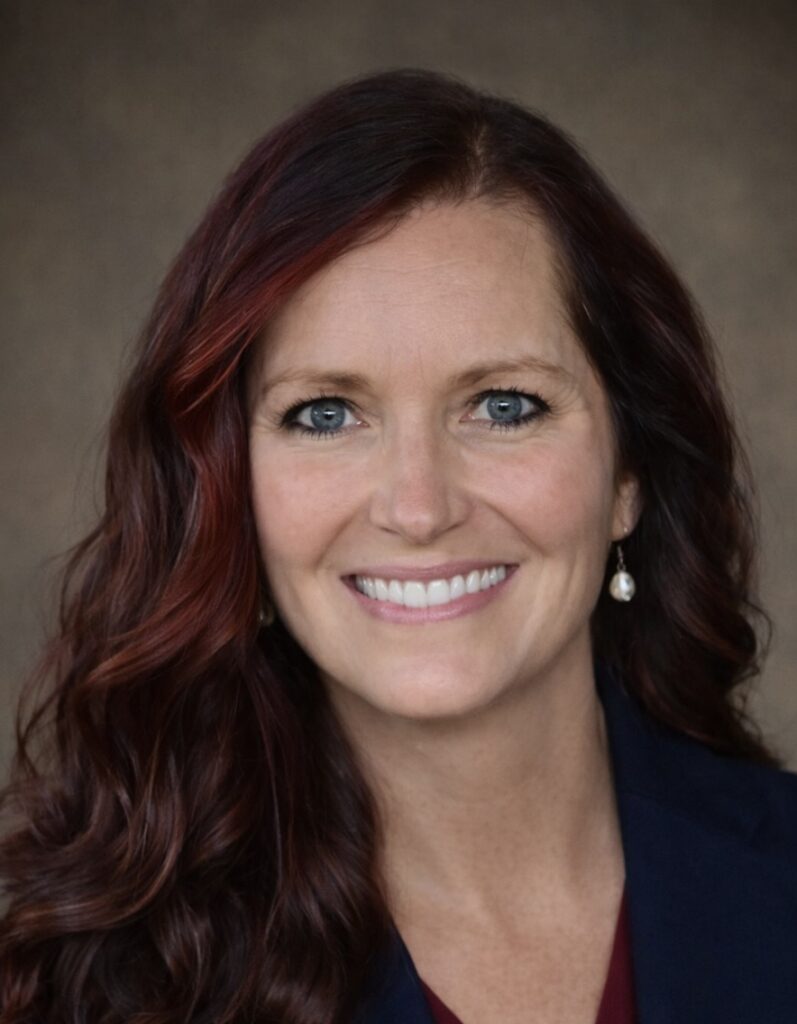
Dean, School of Criminal Justice & Social Sciences
Professor of Criminal Justice
Where did you obtain your degrees?
- Bachelor of Criminal Justice, Majors in Forensic Psychology & Corrections from Tiffin University
- Master of Science in Criminal Justice in Justice Administration from Tiffin University
- Ph.D. in Public Policy and Administration from Walden University
- OPOTA Certification, University of Akron, Police Academy
What did you get your degree in, and what inspired that choice?
My decision to pursue a degree in criminal justice was shaped by an unfortunate personal experience, the unexpected loss of my best friend by a drunk driver while I was in high school. In the aftermath, I was left with more questions than answers about the circumstances surrounding her death. That sense of uncertainty and helplessness had a profound impact on me.
I was driven by a desire to ensure that others facing similar tragedies would not feel the same lack of clarity or support. I wanted to be someone who could advocate for victims and their families, someone who would help someone who would take their concerns seriously and help provide a sense of closure. I also wanted to play a role in holding offenders responsible and helping prevent further harm to innocent people. That purpose ultimately guided me into the field of criminal justice, where I could make a meaningful difference for individuals navigating some of the most difficult moments of their lives.
My research primarily focuses on women in policing, with a particular emphasis on the experiences of mothers in law enforcement. This area is deeply meaningful to me, as I have both lived and witnessed the unique challenges women face in what has traditionally been a male-dominated profession. Despite progress, legislation, policies, and organizational practices often lag behind in supporting gender equity and family-friendly work environments within the policing profession.
There is a growing body of research demonstrating that women bring critical strengths to the profession, such as enhancing communication, reducing use-of-force incidents, and fostering stronger community relationships. As both a former law enforcement officer and a leader in higher education, I am committed to advancing research, raising awareness, and advocating for policies that better support women, especially mothers, so they can thrive in their careers while balancing family responsibilities. My work aims to contribute to meaningful, positive change that benefits not only officers, but the communities they serve. If you’re passionate about this topic as well, I encourage you to read: “Policemoms: Perceptions of Motherhood and Policy in Ohio Police Organizations.”
I strive to model resilience and perseverance, sharing my own personal and professional experiences to show students that obstacles are a natural part of the journey and can be overcome.
Tell us about your first job after you graduated from college.
My first position after graduating from college was with the MEDWAY Drug Enforcement Task Force, a multi-jurisdictional drug unit serving three counties in Ohio. The task force focused on addressing issues related to drug use, abuse, and trafficking across the region.
In this role, I worked as an undercover agent, which required me to operate in various covert capacities. My primary responsibility was to conduct undercover narcotics purchases, building cases that would ultimately lead to the arrest and successful prosecution of drug traffickers. The work was very demanding, but impactful. It was a formative experience that shaped my passion for the field and reinforced my appreciation for the sacrifices and dedication required in this line of work.
How did your career path lead you to teaching at Tiffin University?
After working undercover, I went on to gain additional experience in a variety of roles, including intelligence specialist, patrol officer, and death investigator. My path into higher education was unexpected. A former professor from Tiffin University, familiar with my professional background, reached out and asked if I would be willing to teach an online criminal justice course.
Teaching had never been one of my career goals, but I agreed as a favor. To my surprise, I quickly discovered how much I enjoyed it. Over time, I was invited to teach additional courses, and my passion for educating and mentoring students continued to grow. Eventually, when a full-time opportunity became available at Tiffin University, my husband, who is also in law enforcement, and I made the decision that having one of us in a more stable role would be best for our family. I took the leap into higher education and have never looked back.
That said, I remain committed to staying connected to the field as it will always be a passion of mine. I currently maintain an active commission with the Seneca County Sheriff’s Office, which allows me to stay current and bring real-world experience into the classroom.
How do you prepare students for challenges they’ll face in their careers/after graduation?
I take a very real-world approach to teaching, drawing heavily on my lived experiences to help students understand what a career in criminal justice is actually like without sugarcoating it. I believe it’s important for students to have an honest view of both the challenges and rewards they will encounter in the field.
I also strive to model resilience and perseverance, sharing my own personal and professional experiences to show students that obstacles are a natural part of the journey and can be overcome. I am especially passionate about supporting young women who want to pursue careers in criminal justice, serving as both a support system and a role model. I strive to show them that success in this field is possible, even if they may be in the minority. If I can do it, so can they. Helping students believe in themselves and their ability to achieve their goals is one of the most rewarding aspects of what I do.
What makes Tiffin University stand out to you as a faculty member?
Tiffin University has always felt like home to me. From earning my undergraduate degree to now serving as the Dean of the School of Criminal Justice and Social Sciences, TU has been a part of my life for more than 24 years. That long-standing connection gives me a deep appreciation for the institution and its mission.
What makes TU truly unique is its strong practitioner focus and innovative spirit. The university places tremendous value on real-world experience, ensuring that what we teach is relevant, practical, and meaningful for our students. Most importantly, it is the people! The faculty, staff, and students who make this place so special. I am fortunate to work alongside colleagues who are not only dedicated professionals but also genuinely caring and fun individuals who are committed to student success. It is a special community, and one that I am incredibly proud to be a part of.
How do you incorporate TU’s motto – “Without risk, there is no gain” – into your own life or classroom?
In many ways, my life and career reflect Tiffin University’s motto, “Without risk, there is no gain.” As a first-generation college student, pursuing higher education was itself a significant step outside of my comfort zone, and I didn’t stop until I earned my Ph.D. I also became the first, and still the only, person in my family to enter the field of criminal justice, which came with its own uncertainties, sacrifices, and challenges.
Throughout my career, I, more often than not, found myself in environments where I was the only woman, whether in academy classes, departments, or professional roles. Those experiences required me to take risks, push boundaries, and remain confident in my abilities, even when I stood out. Additionally, much of my work in law enforcement involved inherent risks, but they were risks I was willing to take in order to make a meaningful difference in the lives of others.
In the classroom, I encourage students to embrace that same mindset—to step outside of their comfort zones, pursue opportunities that may feel uncertain, and understand that growth often comes from taking calculated risks.
What’s a fun fact most people don’t know about you – or an interesting hobby?
One fun fact that tends to surprise people is that I once went undercover as a high school student. Yes, very much like the movie, 21 Jump Street! It was truly an experience like no other. At the time, I was 23 years old, but I posed as a junior in high school as part of an undercover operation for over 4 months. It was both challenging and fascinating, and it’s definitely one of the more unique experiences from my career that people always find interesting.