
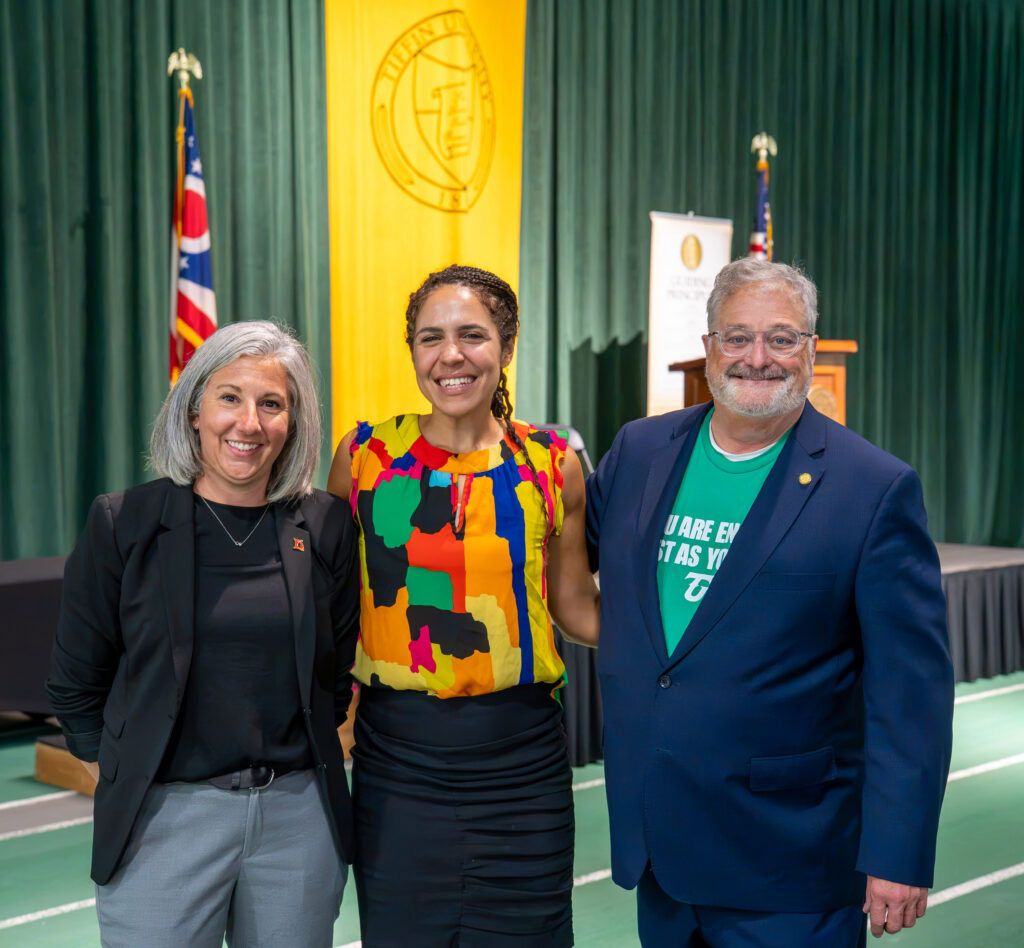
Students from Tiffin University, Heidelberg University and area high schools came together at TU on Thursday, September 10 for the 2026 Mental Health Summit, a day focused on mental health, wellness and the importance of meaningful connections.
Hosted by Tiffin University in partnership with Heidelberg University, the summit brought students from across the community into one space to learn, participate in conversations and consider the role relationships and belonging play in overall well-being. The event featured Dr. Marisa Franco, a psychologist, professor, TED speaker, New York Times best-selling author and nationally recognized expert on human connection and belonging.
Dr. Peter J. Holbrook, Tiffin University Provost and Chief Operating Officer, welcomed attendees and emphasized the importance of viewing mental health and wellness as connected parts of a student’s overall development. He encouraged students to think about well-being holistically and as an important part of becoming healthy, successful individuals. He also highlighted the opportunity the summit provided for TU and Heidelberg students to come together around a shared focus on mental health and wellness, while welcoming area high school students into the conversation.
During her presentation, Dr. Franco challenged students to rethink assumptions about friendship and connection. She explained that building relationships often requires people to take the first step rather than waiting for friendships to develop on their own. “The first is that friendship does not just happen. You have to make it happen,” she said. “The more people think that friendship happens organically, the lonelier that they are over time.”
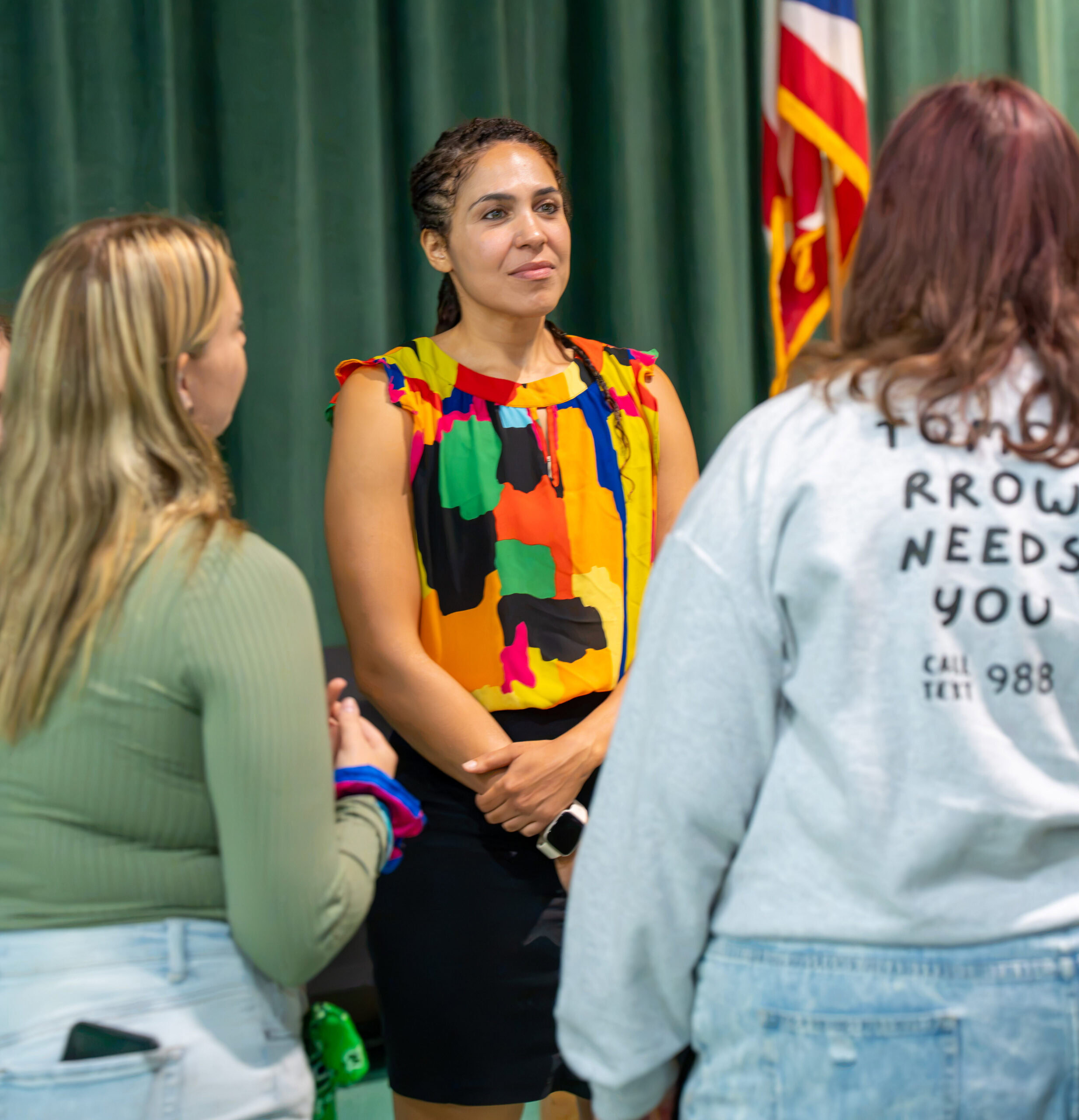
Research shared throughout the presentation showed that people often underestimate how receptive others will be when approached. Dr. Franco encouraged students to initiate conversations and become more comfortable interacting with people they do not already know. Students had opportunities to practice those skills themselves as they found people they had not met and discussed questions about friendship, personal growth and what they value in their relationships. The exercises moved the presentation beyond listening, giving students an opportunity to make real connections with others in the room.
Dr. Franco also discussed the difference between simply being present and actively engaging with the people around you. She described “covert avoidance” as physically showing up while remaining mentally disconnected. “Covert avoidance is our tendency to show up physically but check out mentally. We’re on our phone, we got our AirPods in our ears, we’re talking to that one person we already know,” she said. “To overcome covert avoidance, it’s not just about showing up, but you also have to introduce yourself to people when you get there.”
Dr. Franco focused on vulnerability and the role it can play in creating stronger relationships. She discussed research showing that people often expect sharing something personal to feel more uncomfortable than it actually does. “We’re seeing across the board these findings on vulnerability, that we think it’s going to be awkward, that we think we’re going to be uncomfortable, but once we actually do it, it makes us feel more connected. It makes us feel happier,” she said. Students again put the concept into practice, speaking with one another about what they had learned about themselves, people who had influenced their lives and their experiences growing up.
As the presentation continued, Dr. Franco introduced the idea of becoming an “igniter,” someone who creates opportunities for other people to connect. She shared an example from one of her own college classes, where a student’s simple invitation to have lunch resulted in a group of classmates forming new relationships. “An igniter is a person who creates social groups for everybody else,” she said. “If you really want to help us overcome the loneliness epidemic that is so common amongst college students in particular, you too can become an igniter.” She encouraged students to think about the activities and interests they already enjoy and consider ways they could invite others to participate.
To close her presentation, she shared the IDEA model, encouraging students to initiate, disclose, expose and affirm as they work to develop relationships. She reminded students that finding connections may require moving beyond their comfort zones and intentionally creating opportunities to interact with others. “Find a way to see people more regularly. Maybe that means joining an opportunity on campus that gives you more exposure to other people,” she said. “Remember, it can be uncomfortable at first, and that’s okay. That’s part of the process of connecting.”
The connections continued later that evening as TU and Heidelberg students gathered at Heidelberg University’s Frann’s Fieldhouse for “Dragon Princes: After Hours. Two Campuses. One Night.” The event brought students from both campuses together for an evening of activities and fun, including inflatables, bingo, an ice cream truck, prizes and more, extending the day’s focus on connection beyond the summit itself.